
The Lazy Person’s Guide to Budget Friendly Home Improvements
You Don’t Need a Big Budget to Transform Your Home
Home improvements on a budget are more achievable than most people think — and you don’t need to gut a kitchen or hire a contractor to make a real difference.
Here are some of the best low-cost upgrades you can start this weekend:
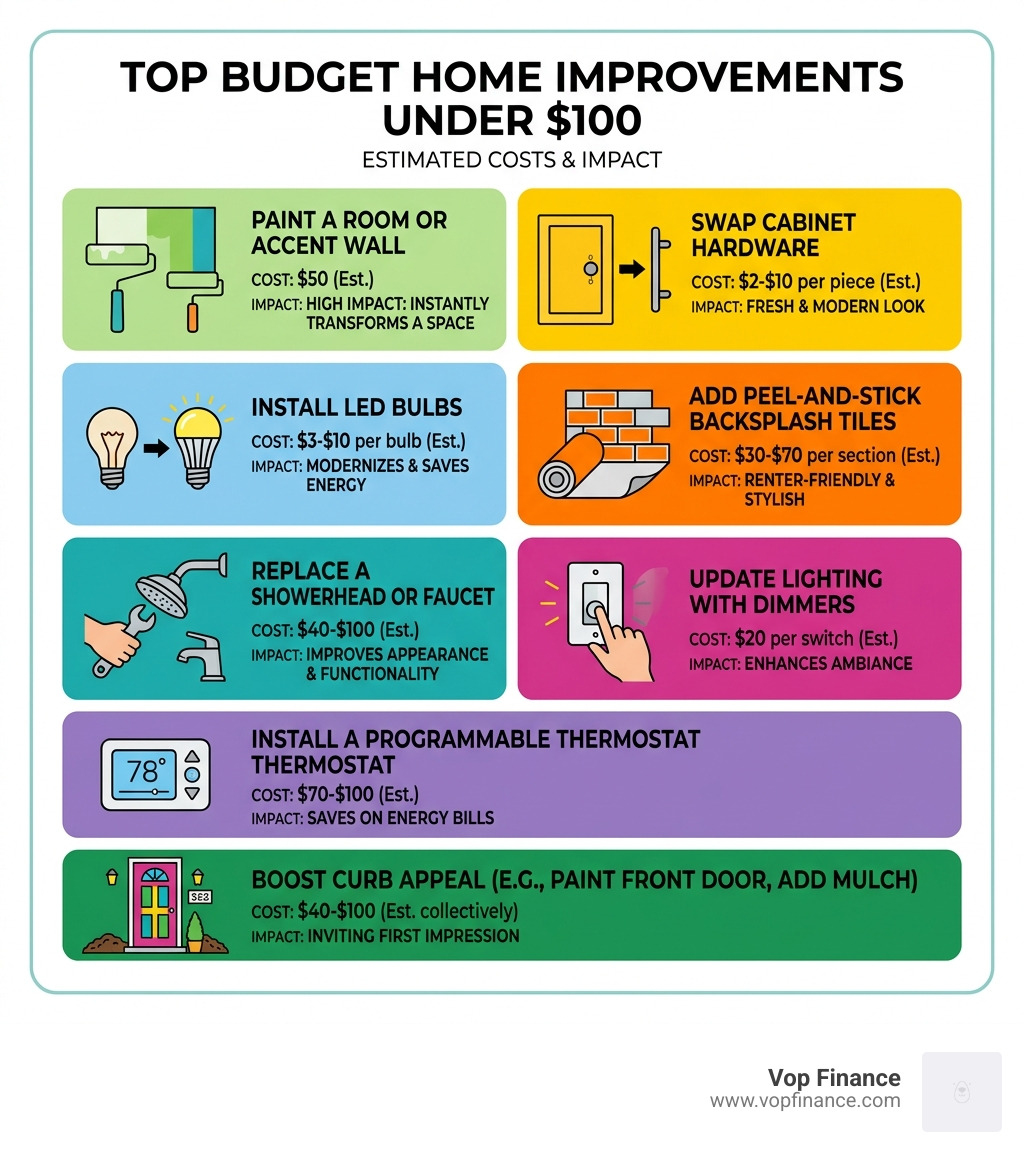
- Paint a room or accent wall — one of the highest-impact changes you can make for around $50
- Swap cabinet hardware — new knobs and pulls cost as little as $2–$10 per piece
- Install LED bulbs — saves money on energy bills and instantly modernizes a space
- Add peel-and-stick backsplash tiles — renter-friendly and removable
- Replace a showerhead or faucet — under $100 and takes less than 30 minutes
- Update lighting with dimmers — around $20 per switch
- Install a programmable thermostat — saves up to 10% on heating and cooling annually
- Boost curb appeal — paint your front door, add mulch, or update house numbers
The good news? Home improvement spending is expected to hit a record $524 billion in early 2026 — but the smartest upgrades aren’t always the most expensive ones. In fact, many of the highest-ROI projects cost under $100.
Whether you’re a renter, a first-time homeowner, or just someone who wants a fresher space without blowing your savings, this guide is for you.
High-Impact Home Improvements on a Budget Under $100
When we think about renovating, we often envision dust, contractors, and thousands of dollars leaving our bank accounts. But as we move through April 2026, the trend has shifted toward “micro-renovations.” These are small, surgical strikes on your home’s aesthetic that provide immediate satisfaction without the financial hangover.

The Power of Paint and Hardware
Paint is arguably the most cost-effective tool in your DIY arsenal. A single gallon of high-quality paint costs between $30 and $50 and can entirely change the mood of a room. If you aren’t ready to commit to four walls, try an accent wall in a bold olive green or a soft terracotta.
Don’t stop at the walls. One of our favorite “lazy” tips is painting your front door. A vibrant red or a sophisticated navy blue creates an instant focal point and boosts curb appeal for the price of a pizza delivery. While you’re at it, replacing dated, tarnished house numbers with modern, high-contrast digits makes your home look curated and cared for.
Lighting and Energy Efficiency
Lighting is the “jewelry” of the home. Many of us suffer under “boob lights”—those flush-mount fixtures that come standard in builder-grade homes. Replacing these with industrial pendants or a simple, clean drum shade can modernize a room in twenty minutes.
When swapping bulbs, pay attention to the Kelvin (K) rating. For living areas and bedrooms, we recommend 2700K LEDs. This provides a “warm white” glow that feels cozy and inviting, rather than the cold, blueish light of higher Kelvin bulbs. For added control, install dimmer switches (roughly $20 each). They allow you to set the mood and save a little extra on your electricity bill.
To further protect your wallet, check your doors for drafts. Installing weatherstripping is a $15 task that can save significant money on climate control. For more inspiration on low-cost wins, check out these 7 Home DIY Projects You Can Do for Under $100.
Kitchen Home Improvements on a Budget for Renters
Kitchens are often the most expensive rooms to fix, but renters and budget-conscious owners have secret weapons.
- Hardware Swaps: If your cabinet knobs are stuck in the 1990s, swap them for brushed nickel or matte black pulls. Just remember to measure the “center-to-center” distance between holes so you don’t have to drill new ones.
- Peel-and-Stick Backsplash: You can get the look of real subway tile or Moroccan patterns with adhesive vinyl sheets. They are heat-resistant, easy to wipe down, and most importantly, removable.
- Under-Cabinet Lighting: Battery-operated LED strips or “puck” lights can be stuck under upper cabinets to illuminate your workspace. It makes the kitchen feel high-end and helps with meal prep.
- Faucet Replacement: Many people assume they need a plumber to change a faucet. In reality, if you have a wrench and can turn off the water valves under the sink, you can install a modern pull-down faucet in under 30 minutes.
Bathroom Home Improvements on a Budget for Beginners
The bathroom is a great place to build your DIY confidence. Start with a soft-close toilet seat; it’s a small luxury that prevents that jarring midnight “clack.”
If your bathroom feels damp, consider a humidity-sensing wall switch for your fan. These automatically turn the fan on when they detect moisture, preventing mold growth. For a visual refresh, framing a plain plate-glass mirror with stained wood strips or even painting an old wooden vanity can make the space feel like a spa. Finally, don’t underestimate a “caulk refresh.” Removing old, yellowed caulk around the tub and applying a crisp white bead of silicone makes the whole room look brand new.
Maximizing ROI: Smart Financial Planning for Your Renovation
As we look at the financial landscape of early 2026, we see that homeowners are sitting on more equity than ever, but they are also more cautious about how they spend it. Not all home improvements on a budget are created equal when it comes to resale value.

Structural vs. Cosmetic ROI
It’s a hard pill to swallow, but that $50,000 gourmet kitchen remodel might only recoup about 51% of its cost when you sell. On the flip side, boring structural updates often pay for themselves. For instance, replacing old siding with new vinyl siding has historically seen a recoupment of up to 97%.
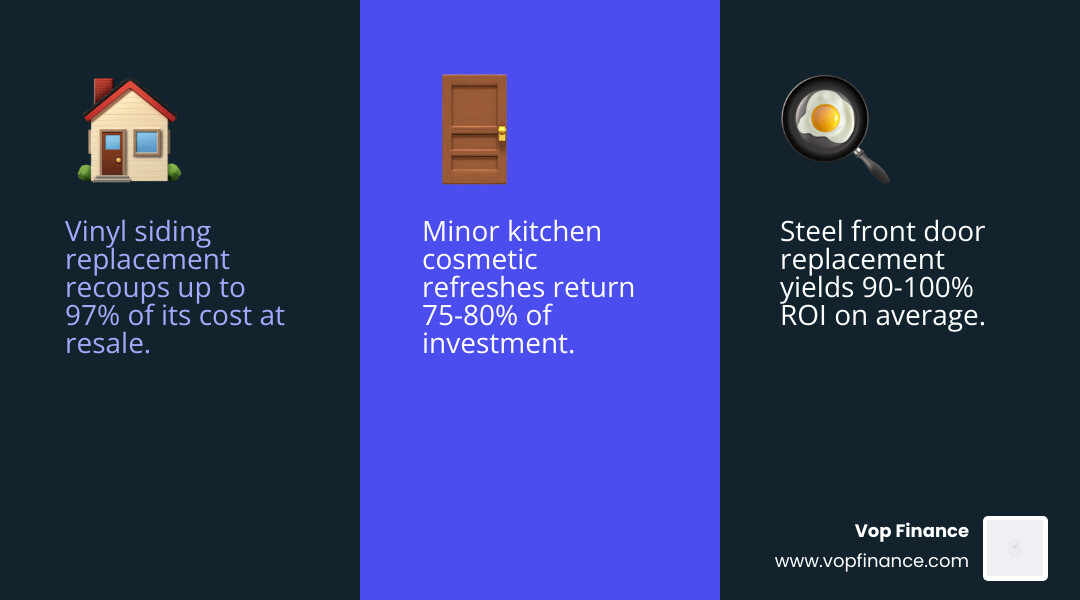
| Project Type | Average Cost | Estimated ROI |
|---|---|---|
| Vinyl Siding Replacement | High | 97% |
| Front Door Replacement (Steel) | Low | 90-100% |
| Minor Kitchen Cosmetic Refresh | Medium | 75-80% |
| Major Kitchen Remodel | Very High | 51% |
| Deck Sealing/Staining | Very Low | 100%+ (via maintenance) |
The “Sinking Fund” Strategy
At Vop Finance, we believe in empowering your decisions through clear planning. Instead of putting a renovation on a high-interest credit card, we recommend using a “sinking fund.”
A sinking fund is a dedicated savings pot for a specific, predictable expense. If you know you want to spend $1,200 on new flooring by December, you set aside $100 a month starting now. This “reverse debt” approach ensures that by the time you’re ready to swing a hammer, the project is already paid for. This prevents “scope creep”—the tendency for a $500 project to turn into a $2,000 one because you didn’t have a hard ceiling on your cash.
Energy Efficiency and Long-Term Savings
Smart upgrades do more than just look pretty; they pay you back every month. A programmable or smart thermostat (like a Nest or Ecobee) can save up to 10% on annual heating and cooling costs. When energy prices fluctuate, these “set it and forget it” tools are essential. For more ideas on projects that balance style and value, explore these 30 High-Impact, Low-Cost Home Improvement Ideas.
Essential Tools and Common Mistakes to Avoid
Before you rush to the hardware store, let’s talk about the “DIY Starter Pack.” You don’t need a garage full of power tools to handle most home improvements on a budget.
The Essential Toolkit
- Screwdriver Set: You’ll need both Phillips and flat-head for everything from outlet covers to cabinet pulls.
- Channel Locks/Adjustable Wrench: Essential for plumbing tasks like replacing a showerhead or faucet.
- Current Tester: If you are changing a light switch or a fixture, this $10 tool tells you if the wires are “hot” so you stay safe.
- Level: Because nothing ruins a gallery wall faster than a crooked frame.
- Putty Knife and Spackle: For fixing the inevitable “oops” holes in the drywall.
Common Pitfalls
One of the biggest mistakes we see is skipping the preparation phase. Whether you are painting or staining a deck, 90% of the quality comes from the cleaning, sanding, and priming you do before the color goes on.
Another mistake is choosing “too trendy” colors if you plan to sell within the next two years. While you might love a neon purple bathroom, neutral tones like warm beiges, soft greys, or “greige” appeal to the widest range of buyers.
Lastly, know your limits. We love a good DIY project, but anything involving the main electrical panel, gas lines, or knocking down walls should be left to the pros. A mistake in these areas can cost ten times more to fix than the original pro’s fee.
Frequently Asked Questions about Home Improvements on a Budget
Which home improvements add the most value for the least cost?
Fresh paint and improved curb appeal (landscaping and front door updates) consistently offer the highest return on investment. These projects are relatively inexpensive but significantly change a buyer’s first impression of the property.
Are there renter-friendly ways to update a kitchen?
Absolutely. Focus on “non-permanent” changes: use peel-and-stick tiles for the backsplash, apply contact paper to countertops (if allowed), and swap out the cabinet hardware (just keep the old knobs to put back before you move). Plug-in under-cabinet LED strips are also a great way to add light without wiring.
How can I save money on my energy bills with home upgrades?
Start with a programmable thermostat to optimize your HVAC usage. Follow up by switching every bulb in the house to LEDs and applying weatherstripping to leaky doors and windows. These three steps alone can reduce your utility bills by 15% or more annually.
Conclusion
Improving your home doesn’t have to be a source of financial stress. By focusing on high-impact, low-cost projects—like a fresh coat of paint, modern hardware, and energy-efficient lighting—you can transform your living space while keeping your savings intact.
At Vop Finance, we believe that smart home ownership starts with smart financial decisions. Whether you’re saving up for a major renovation through a sinking fund or looking for ways to trim your monthly utility bills, we are here to simplify the process. By taking a “lazy” but strategic approach to home improvements on a budget, you can build equity and enjoy a more beautiful home starting today.
Ready to take control of your home and your wallet? Empower your financial future with the tools and insights you need to make every dollar count.
